
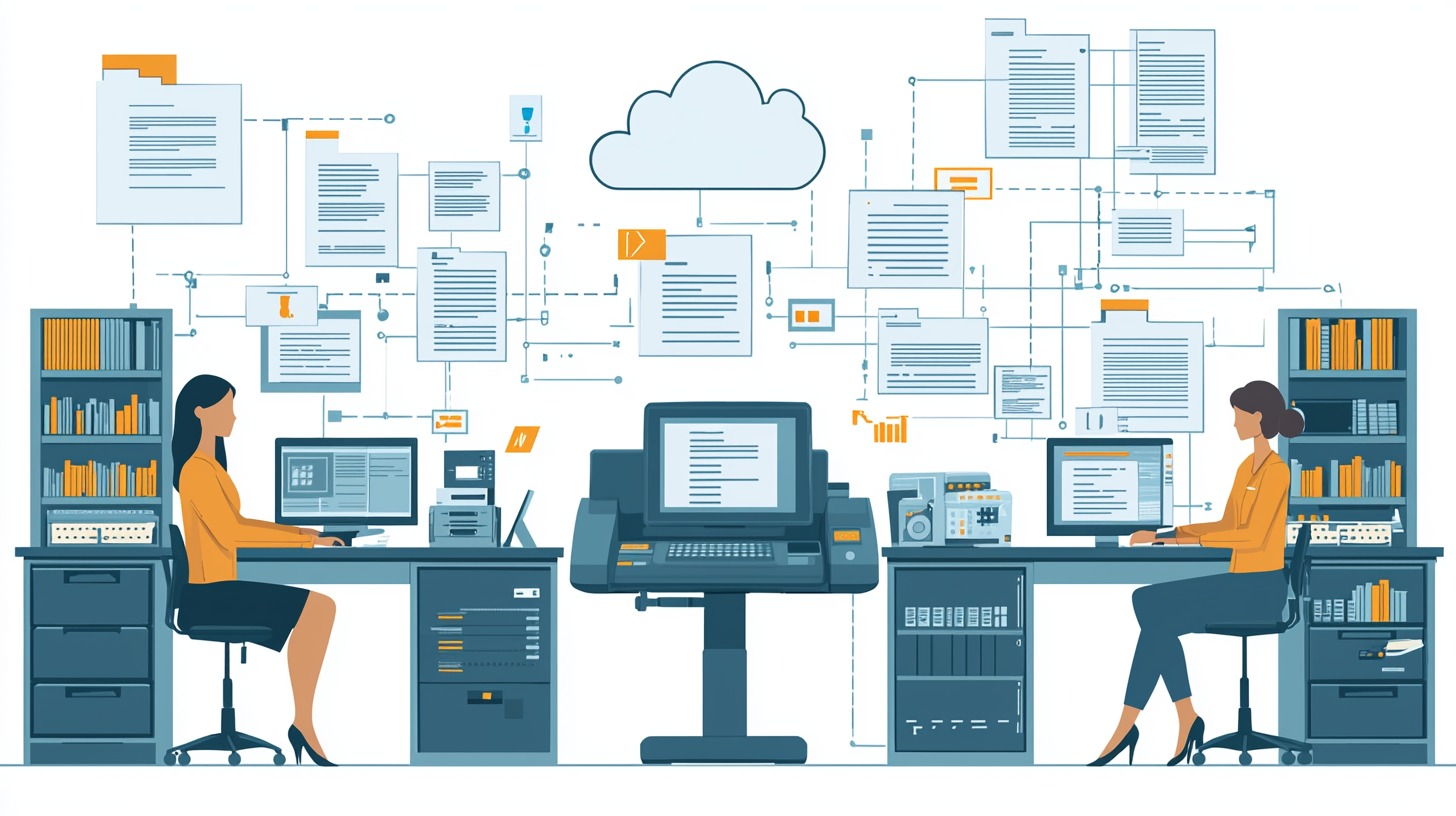
Document scanning has significantly advanced with AI, character recognition, mobile capabilities, and compliance features. Leading applications now integrate these technologies, such as those found at https://scanner.biz/reviews/best-free-scanner-apps/. Businesses use these tools to digitize and manage records more efficiently. The future of scanning will emphasize seamless integration, automation, and enhanced security. This article examines emerging technologies that optimize document management.
AI and machine learning in document scanning
AI and machine learning (ML) revolutionize document scanning by automating tasks and improving accuracy. These technologies extract data, eliminate duplicates, and reduce manual effort. ML algorithms improve over time, ensuring greater precision in recognizing diverse formats and layouts, leading to faster workflows and better data integrity.
AI also enables automatic document classification and categorization by detecting patterns, streamlining indexing and retrieval. This is vital for industries handling large data volumes like healthcare and finance. AI also enhances fraud detection by validating document authenticity and flagging discrepancies.
Tools like ICR and OCR identify and extract text, categorize it, and structure data for automated processes or analysis, helping businesses uncover trends and insights more effectively.
Blockchain technology for document authentication
Blockchain transforms document management by ensuring integrity and authenticity through tamper-proof digital trails. Each scanned document receives a unique cryptographic hash, making alterations detectable. This is crucial for industries like legal and finance where accuracy is paramount.

Blockchain allows organizations to verify a document’s lifecycle, from creation to modification, fostering trust and simplifying audits. Its decentralized nature enhances data security, reducing hacking risks.
Integrating blockchain ensures compliance with regulations like GDPR and HIPAA. It also facilitates secure collaboration by granting controlled access to verified documents. As adoption grows, blockchain will redefine document management and authentication.
Cloud-based scanning solutions for accessibility
Cloud technology revolutionizes document scanning by enabling secure, centralized storage and on-demand access to digitized files. These solutions improve collaboration, reduce physical storage needs, and scale easily with business growth.
A major advantage is disaster recovery. Cloud-stored files remain accessible during system failures, ensuring business continuity. Automated backups further reduce data loss risk. At scanner.biz, secure cloud integration ensures that your documents are always available, no matter the circumstances.

Advanced cloud platforms are making life easier with AI-powered indexing and real-time analytics, so finding data is faster and productivity gets a serious boost. Syncing these tools with your existing systems helps streamline everyday workflows. As remote work and the need for easy data access keep growing, more businesses are jumping on the cloud for document scanning.
OCR technology is stepping up
OCR (Optical Character Recognition) is still a big deal in document scanning, and it keeps getting better. Modern OCR can handle multiple languages, tricky fonts, and even handwritten notes. This makes digitizing older, messy documents a breeze.
Better accuracy means fewer manual errors and time saved. Think about how banks extract invoice details using OCR, automating the accounting process. On top of that, OCR helps meet compliance requirements by capturing and securely storing data the right way.
With AI in the mix, OCR can now pick out specific info from documents, like key terms in contracts. It can also spot patterns, helping with predictive analysis and smarter decision-making. As it evolves, OCR will only get more powerful.
Eco-friendly scanning is the future
Sustainability is the name of the game, and document scanning is going green in a big way. Newer systems focus on energy efficiency, cutting down on costs and environmental impact. They’re perfect for companies aiming to hit those corporate social responsibility goals while appealing to eco-conscious customers.
Going digital with paperless workflows slashes paper use and waste. Plus, cloud-based systems remove the need for bulky physical storage or transporting documents, making operations both greener and more cost-effective.
Recycling is also on the rise. Many manufacturers now offer take-back programs to responsibly recycle or refurbish old equipment. Some are even using biodegradable materials in their products. These eco-friendly innovations show how technology can be good for business and the planet.